
Hello and welcome back to Burning Questions! Each week, we roll through the hottest topics in Marvel Snap and try to get to the bottom of what's going on in the game. This week we got a stunner of an OTA and the team shared a bunch of information about bots!
1) Why do old cards keep getting nerfed for the sins of new cards?
The common fan theory seems to be that Second Dinner continually nerfs old cards instead of newer cards in some kind of cash grab to sell the more powerful cards. However, we've seen recent nerfs to new cards while they were still on top of the meta like First Steps Mister Fantastic and Strange Supreme. They definitely do have a problem with nerfing Season Pass cards after their season ends, though.
New cards aren't given any longer leash when they're statistical outliers as any other card, but it seems obvious that the power level of a new card will be more unpredictable and volatile than an existing card that players have already gotten their hands on. We've also seen quite a few buffs to very early pool cards recently like Wolfsbane, White Tiger, and Green Goblin.
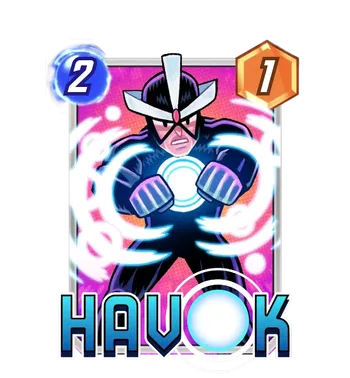
When a new card releases, it changes the best synergistic packages that a card has. When a card like First Steps Invisible Woman is released, it permanently changes the way cards like Havok and Sunspot are used, and that's not a bad thing. Second Dinner wants to create little synergistic packages of cards that can work together. When the package as a whole is outputting too much power, it makes sense to target the cards that are taking advantage of that power.
People who are lamenting that Sunspot and Havok got hit because Invisible Woman released are wishing there were a way for those cards to remain flexible and powerful enough to be played without Invisible Woman, but that's a ship that sailed once Invisible Woman released. Cards are designed to boost other cards and become more narrow in their synergies in order to reward putting them together in your deck. For example, viewing Doctor Doom’s balance totally separately from Doom 2099 would make no sense—they’re now forever linked.
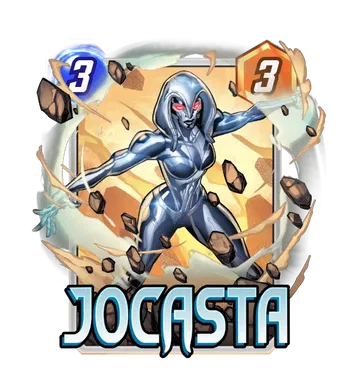
The upcoming card Jocasta is going to be another prime example. The Activate mechanic before her introduction and after are going to need to be balanced differently. Imagine if something like Luke Cage or Mystique were new releases as opposed to cards already in the game. The balance demands before and after their release would look pretty different! Additionally, it's generally exaggerated how often an old card is nerfed because of a new one. Just as often the new card is the part of the new package that gets nerfed, especially if it's the more flexible part.
When Bullseye released, it permanently changed the way people play Morbius or Daken and the same is true for Galacta and Gwenpool with cards like Brood. But in each of these cases the new card got hit with a nerf before any of the pre-existing cards. The best way to understand Second Dinner’s balance philosophy is through the lens of decks and card packages. Those are the stats they're looking at and those are what they're attempting to diversify. Occasionally that means the best nerf target is an old one, but it's not some insidious conspiracy, it's because they value a meta game with a variety of decks and card packages that still rewards synergy.
2) What was the goal of the OTA changes to Move cards?
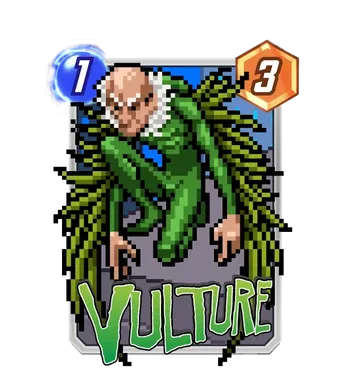

If you haven't played with or against a lot of move decks recently, this change may have been a head-scratcher. The simplest way to digest it is this: having a 1-Cost card so responsible for an archetype’s power was causing issues. Human Torch being able to double meant he was the highest-ceiling move payoff and they swapped the curve positions of the incremental scaling Vulture with the doubling Human Torch.
Here's why:
- When the cheapest option is the strongest, it incentivizes players to build around growing that card as much as possible.
- This means that any new move payoffs that helped scale this best option were risky to design. Torch had become a design constraint and cards like Taskmaster were already changed because of him specifically.
- Torch’s cost and scaling also meant that the decks had a clear plan A and less desirable plans B and C. This change diversifies the decisions and options within the move archetype.
- When a 1-Cost card is important in the meta, it dramatically increases the importance of Killmonger at the same time. This left destroy AND move decks in a weird meta position relative to each other.
- The problems were exacerbated at very high MMR (or maybe by a handful of talented move pilots) who could exploit sequencing knowledge and Torch's power and cost to dodge priority, make unpredictable plays, and beat their opponents with giant Human Torches, while easily dodging Killmonger. This change might alleviate some of the high MMR issues with Torch while leaving lower MMR players nearly unaffected.
It's going to be really interesting to see how things shake out. Overall, it's a clever, necessary change. It's certainly a nerf in the short-term, but I'm confident new, more novel move decks will be discovered and additional move cards will be released in the future. The new Vulture is going to be really fun and there are plenty of fun ways to abuse the new 3-Cost Torch as well.
One of the main things the entire set of move changes does is open up the possibility that cards like Fan-Fei, Topaz, Xorn, and Hercules might find their way into more lists. They never felt worth it when moving 1-Cost Human Torch was so easy, but the new 3-Cost Torch needs to be moved multiple times and decks will need more and/or different enablers than previously.
3) Which Snap creators are on the rise?
Churn doesn't just apply to the players of a game. It applies to content creators too! If one of your favorite content creators is taking a step back and making less content lately, here are some creators to check out who are really hot right now and continuing to grow. Come find your new favorite Snap creator!
Husky puppies - Twitch
Husky’s long been known as a top player and fun Twitch watch, but he's been blowing up recently with a commentator appearance on the recent Golden Gauntlet World Championship Qualifiers and a co-host spot alongside Alex Coccia on The Snap Chat.
Snap on this!! Podcast
My personal favorite Snap podcast with LaurenWhatevs, ItsRie, and Benjamin Roller. Expect plenty of levity and host chemistry, but still with a competitive and analytical slant.
Nolucksgiven
Fresh off top 16 at the Golden Gauntlet World Championship Qualifiers, Nolucksgiven does things like get the unfiltered, instant reaction of a top move-bounce player to the recent OTA!
HarryPerry13
Charming videos with a focus on helping newer players or those trying to climb their way to Infinite.
Roram
Roram got a major bump when he was able to win the Golden Gauntlet II with a 34 card deck, but he was already a super high-level player with a positive high-energy stream before that.
Prashaun
Prashaun has top-quality production gameplay videos as well as the best lore videos around. Come learn more about your favorite Snap characters from a Snap player and comic reader.
Snap Academy - 8 Cube Circus - Smlz, Xenaid, and Denish
If these names sound familiar, it's because they're constantly at the top of the ladder and your favorite streamers steal their decks all the time. How this isn't more popular is a mystery. Well, maybe it's the lo-fi audio, but if you're serious about improving as a player or interested in how top players think, you need to be listening to this.
Maydaygoingdown
High-quality production, welcoming vibes, and plenty of comic knowledge makes Mayday's streams super fun. Expect Snap as well as Rivals.
Notmydance
Fun, novel decks and Snap analysis backed by positivity and solid production. Frequent videos with slick commentary.
If you have any favorite creators, please shout them out in the comments! Now let's hop over to the ask-the-team channel on the official Marvel Snap discord and grab some developer Questions and Answers!
4) Question: I see a lot of people talking about “cheating” bots that are able to see what you are going to play before anything is revealed. Is there any truth to that? Obviously a human can see what’s been played on previous turns and make guesses about what will be played next, but I don’t know if something like that could be coded into the bots
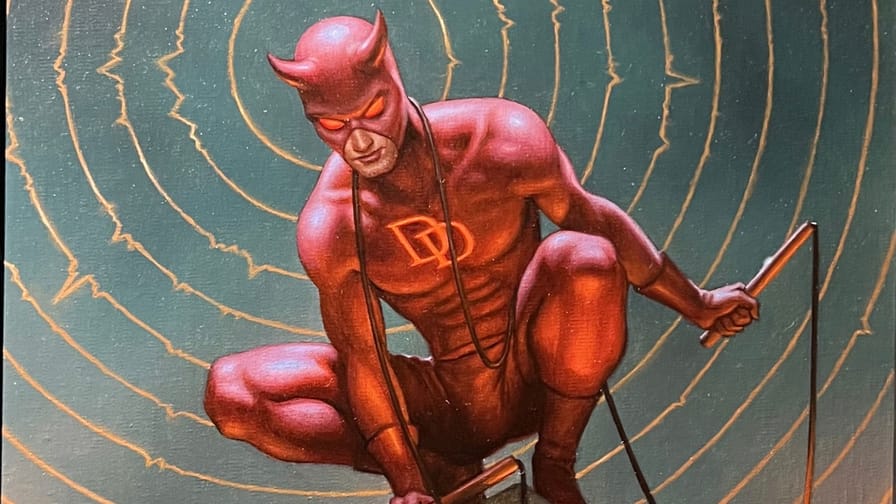
Answer: Snap has a variety of different bots that we've used over the life cycle of the game. One of those bots we talked about very early, before I even worked here I think, which would make plays to win based on your own plays after you ended the turn, with information about the future game state. Colloquially, this bot has been called the "Daredevil" or "cheater" bot.
This bot is no longer active on ranked or in our limited time game modes! We've been significantly reducing its use for several months as we tuned a newer bot. That replacement was completed last month.
Our new "fallback bot" does not have the ability to know what's coming from you or random outcomes. It makes plays based entirely on its own understanding of Snap and how to play with and against the decks it's learned. It's a pretty good player, but that strength comes from how good its decisions are--not a massive information advantage.
-Glenn
5) Question: The "Daredevil" cheating bot was very hated (specially in LTM) so I'm glad to hear that it has been phased out. Nothing worse than facing a mismatch of cards that perfectly counter your every move.
However, there is (was?) another kind of cheating bot that also sees your plays and knows the outcome of random events, and it uses that information to just BARELY lose against you. Maybe he steals a location but Marvel Boy hits just the right cards to win it back by 1 point. Or a random card summoned from a location or ability ruins his win.
It's nerve-racking! But also, kind of fun IMO.
Was that bot also eliminated/replaced by a bot that plays without hidden information?
Answer: Not exactly--we have variations on the fallback bot that plays more like a human with different skill range targets, but we are also still using the "Daredevil loss bot" as a guaranteed loss bot some of the time. That information is necessary to achieve its winrate target (which is basically 0%), while other weak bots provide more mixed results.
-Glenn
6) Question: I’m glad you’ve finally acknowledged the existence of different styles of bots, especially the cheating ones. But it does raise the question of why you had cheating bots in the first place, especially for ticketed (=$$) game modes, let alone ladder. The stated explanation has always been that bots reduce queue times, but that has never truly explained why some people get them and others don’t, and those who get them do so with regularity (1/2 in the 60s, 1/4 in the 70s, etc). It also doesn’t explain why some bots are literally programmed to cheat.
So can we please get a good, honest, complete story of bots??
Answer: To be clear, we haven't used the "Daredevil winbot" in limited time game modes while I've been working on them. Ever since we started releasing these modes, we've been using previous variations of the current fallback bot instead.
I've talked fairly openly about bots in the past--the posts are searchable--so I'm not sure where the "finally" sentiment I'm seeing around is coming from. Their purpose is twofold: to inject cubes into the system (which would otherwise shrink over time) and to keep queue times short while providing a competitive experience.
The old Daredevil bots used an information advantage to compete with players--they weren't very smart, and even with info were highly exploitable. But more relevantly they weren't even *fun*, which is why we set about replacing them.
As for why some people get them and others don't, they're uniformly distributed across matchmaking pools, which determine their appearance rate. If one player is consistently harder to pair than another, the former is going to get a bot more often. The alternative would be pairing players across much wider skill and collection gaps--we know players don't like that!--or increasing their queue times.
As for why the bot should be a challenge? If its role is to substitute for a competitive experience in a low matchmaking scenario, that's what we want it to provide as best it can.
-Glenn
Glenn also followed up again:
Since I noticed some surprisingly "passionate" confusion on social media around something I thought was clear: the purpose of the "Daredevil winbot" was certainly never to add cubes into the system. That would be pretty silly since it...tried to win. Different bots do the job of losing.
Scosco's note:
TL;DR - Here's the current situation with bots:
- ‘Daredevil’ bots have been phased out. These were bots that could see your plays in an attempt to beat you. They weren't impossible to beat, but they were harder to exploit than other bots. They existed to alleviate queue times, so higher MMR players would have faced them significantly more than mid-MMR players. These bots were never deployed in an LTM.
- The ‘Daredevil’ have been replaced with a new bot Second Dinner has been working on for a while that cannot see your plays, but plays better. Again, they're not human, so they can be exploited, but are harder to beat or spot. They're also meant to alleviate queue times and more closely simulate the experience of playing against a real player.
- I believe these bots use machine-learning, but this is not confirmed by Second Dinner and they've only commented on the technical design of the bots by saying they “can't really discuss that, as it's proprietary technology we developed.”
- We still have a variety of other bots including bots that always try to lose (and can see your plays to do so) and other bots designed to inject cubes into the economy as opposed to just alleviating queue times.
That's it for this week! Come find me on social media or hit the comments if you have a Burning Question you'd like answered!