
Welcome back to Burning Questions, your weekly look at Marvel Snap's hottest topics! This week we're discussing emotes, budget decks, and zombie variants! Let's dig in!
1) What is the rudest emote?
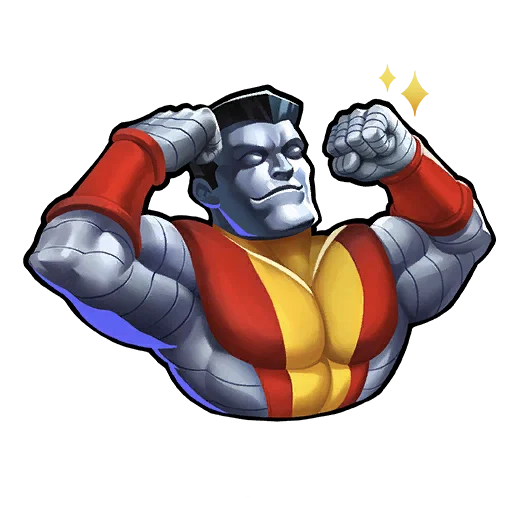
With Deadpool's Diner giving out a boatload of emotes and the sweatiness of Sanctum Showdown, you've probably seen more emotes lately than ever before! For whatever reason, the player base has seemed to settle on three main emotes to celebrate (or gloat, depending on your perspective).


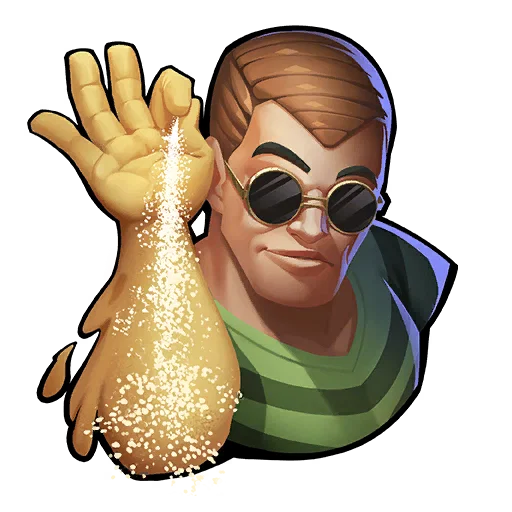
One that I'm surprised doesn't get more use in an attempt to annoy is the salty Sandman emote. Perhaps it's low usage has to do with it being locked as the top prize in the future villains album?
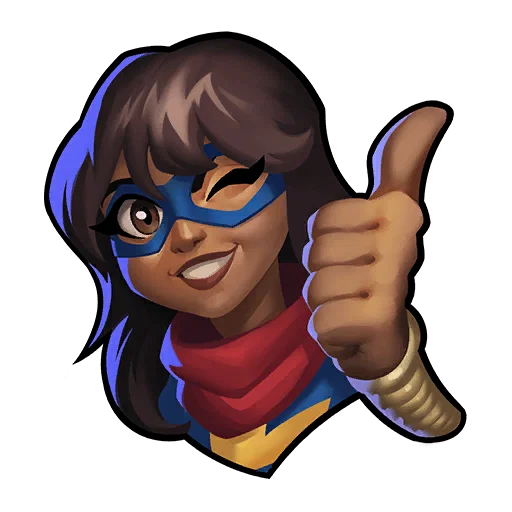
The classic that is generally interpreted as hostile is the ubiquitous Kamala Khan emote. When people think of the emotes in Marvel Snap, this is probably the very first one they think of. As a Snap player, the negative connotation is probably so ingrained for you by this point that it's impossible for you to see it as the friendly thumbs up gesture it was probably meant to be.
In many ways Ms Marvel has been supplanted by the oopsie Deadpool. This emote has taken the game by storm, partially because it was given out for free to everyone following the awkward launch of leagues. This is pretty easily the emote I see the most often these days. I wish it were used to denote a cheeky or clever play, but it most commonly used to rub it in after a win.

A new contender is on the horizon! The winking Agatha Harkness coming next week in Grand Arena is very reminiscent of the Kamala thumbs up and it's hard to imagine it will be used or interpreted in a very different way. I'm curious to see if this will become as common as Ms. Marvel or Deadpool or if players will stick with what they already have.
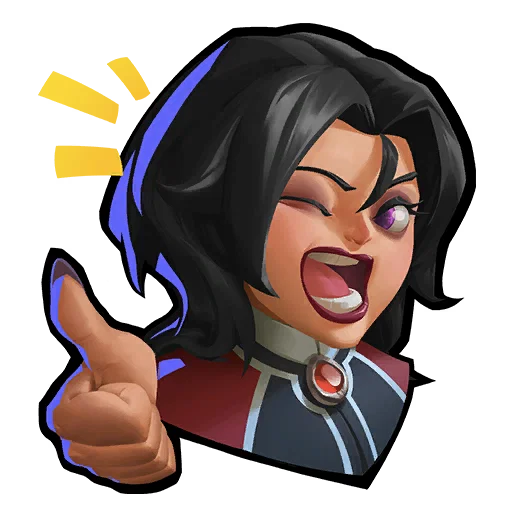
With varied emotes more accessible than ever, I encourage anyone who is bothered by emotes to consider that the intent behind an emote is not necessarily malice or taunting, but is often just someone having fun and trying out their newly acquired cosmetic. If you're really bugged by them, get ready to pound that mute button, because players are getting more than ever before and there are some enticing ones coming up.
2) What's the best free to play deck?
Do you need a complete collection and the latest shiny toys to compete? Having the newest cards can make taking decks you see from content creators a lot easier, since, by the very nature of content creation, they're going to be using the newest cards much of the time. But I definitely don't think having the newest cards or all of the best Series 5 cards is necessary to compete. Some of the very best decks in the game include a limited number of newer Series 5 cards. People love novelty, but these decks are all top tier meta choices at the moment, even if you're missing an optimal card or two.
Budget Ongoing
(swap in Captain Carter if you have her)
Budget Sauron
(swap in Hydra Bob if you have him)
Budget Move
(swap in Sparky if you have him)
Budget C2
(swap in Lasher if you have him)
Budget Bullseye
(swap in Frigga if you have her)
3) What are the best Zombie variants?
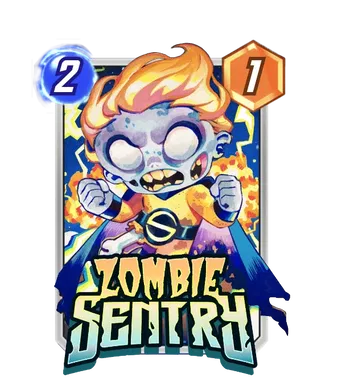
When zombies were first announced, I was skeptical that Second Dinner would be able to make compelling variants with these reanimated characters, but I was dead wrong.
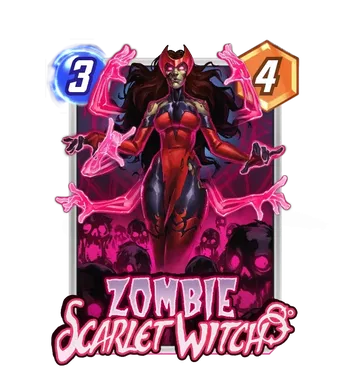
This Ivan Fomin Zombie Scarlet Witch from the end of the season pass is pretty great.
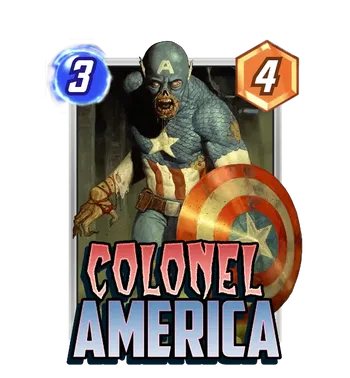
E.M. Gist has made a pretty cool Colonel America variant that doesn't yet have a release date.
I love all of the Rian Gonzalez zombie variants, but the Scarlet Witch and Hunger are my two favorite zombie-related variants so far. Goose vibes surprisingly well with the Zombies!
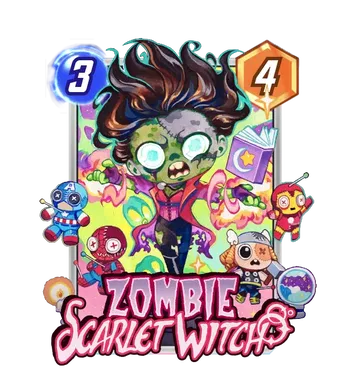
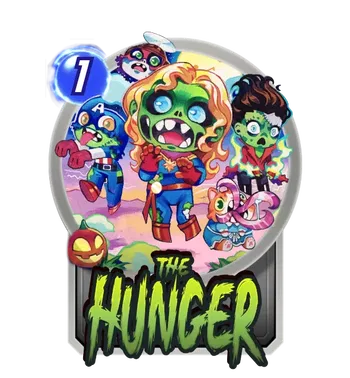
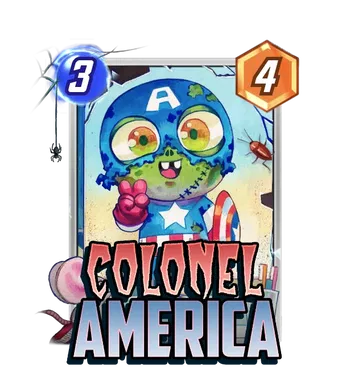
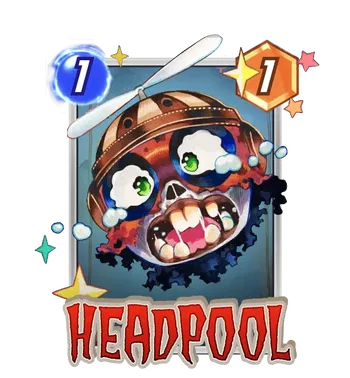
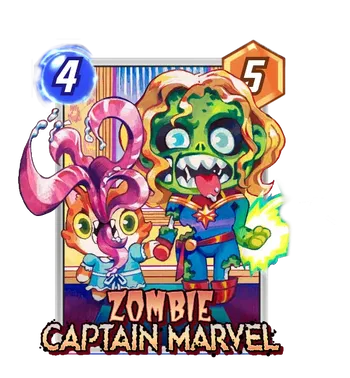
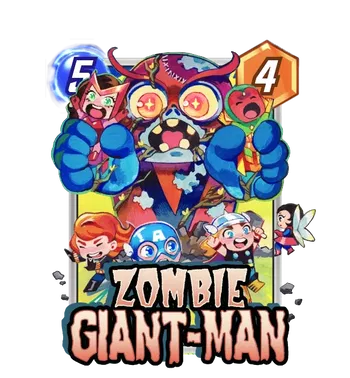
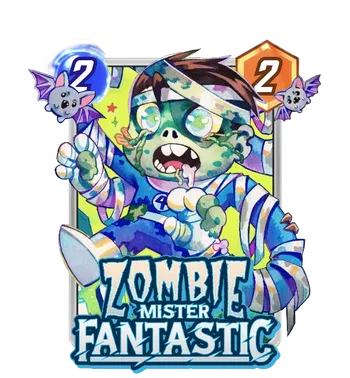
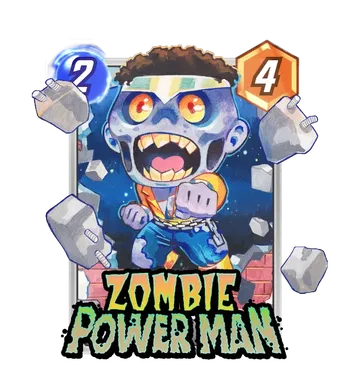
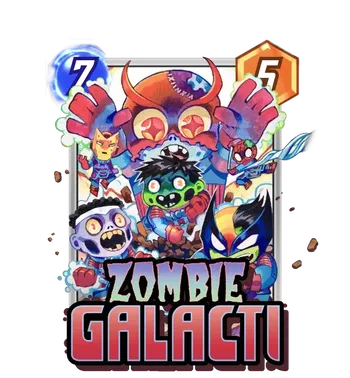
And we've still got a couple more Rian zombie variants to look forward to!
Now, let's hop over to the official Marvel Snap discord and grab a couple of developer exchanges!
4) Question:
How much randomness is too much randomness?
Obviously, there's a degree of randomness in a card game like Snap. Simply drawing cards introduces randomness. Snap adds more with the locations. And that's what makes games like this fun, Snap especially.
But from a game design standpoint, at what point does too much randomness take away from the fun and strategy of the game?
I had this thought yesterday when I lost yet another coin flip on the final play of the game (in this case if Marvel Boy's final hit was on a card in the left lane I lose, right lane I win, pure 50/50). And just now I lost because my opponent's Omniversal Presence changed a location to Altar of Death before my reveal, a one-ish percent chance.
A lot of recent Snap cards include randomness in their ability (Since May: Zombie Mr F, Zombie SW, Danger, Warlock, Andy, Viv, Mole Man, Thing FS, Herbie, Mr F FS, Nightmare, Cobra, Merlin, Surge, Esme, maybe more I'm not thinking of). So I'm wondering, when do we get to too much randomness? And how does that factor into new card design?
Answer:
I'm not aware of a useful unit of measurement for answering the question. "How much randomness is too much?" requires quantifying it, which is difficult in complex, changing systems. We don't have a reference distribution or expected frequencies, the way math problems would.
How we approach randomness involves a lot of consideration around how and when we apply it, and what kinds.
In gaming, we often use the lenses of "pre-decision" and "post-decision" randomness. Essentially, are you making a decision based on a randomized premise (like your starting hand) or before a random event (whether or not to play Gambit). Prior to Hearthstone, most CCGs heavily indexed on the former--digital games have exploded usage of the latter, and Snap's certainly among them.
Generally speaking, pre-decision is fine and fun--foundational to most games. For post-decision, we aim a majority of it at setups and conditional effects, letting it feed into the natural entropy of how games develop in unique ways. Surge is a great example, where each "roll" opens up a new possibility tree and subsequent decisions. Ares is more of a single big bet, but has his place and fans as well.
So, that's card design in brief.
As for games, that's more nuanced. When I started here, one of the things I wanted to change was how few games saw turn 6 resolve. Turn 6 was where lots of awesome plays could happen--in late 2022, it was too obvious who would win, and thus turn 6 didn't happen very often. So the design team did target a shift to create a little more uncertainty, in part by flattening polarized winrates for cards but also by increasing some of the variation.
Generally speaking, I think it's ok for lots of turn 6s to be decided by flips--not all, but it's part of Snap for sure. Flips even out in the long run, and skilled players can tilt true flips with consistent play and by recognizing opportunities to get lucky. When both players get to the end of the game and both think they can win, that's really an ideal outcome--lots of games struggle with balancing catch-up mechanics, or mercy rules, or players AFK'ing, but we don't really have any of those issues due to how Snap's designed.
-Glenn
Scosco's Note:
What a fascinating and thoughtful response from Glenn. A couple things stick out here, first being the concept that certain kinds of randomness add variety and texture to the game. The random element of cards like Surge don't feel the same as other variance; they actually boost feelings of engagement and freshness. “Single bet” randomness like that of Ares feels less dynamic, but still adds something for the player. In the case of Ares, the player can boost the odds of their bet in deck-building to make it feel pretty low risk. I would argue a card like Gambit feels far more negative than either Surge or Ares. It feels like a single bet, but one with wild and unpredictable outcomes. A card like Gambit doesn't unlock potential future decisions in a cool way like Surge, it just feels like an annoying, uncontrolled squirt gun that invalidates decision-making, rather than enhancing it.
Secondly, it's incredibly interesting to learn that there has been an active ongoing effort to have more games fully resolve in six turns! I agree that it's better for the game the more often players feel like they have enough of a chance to win that they allow the last turn to resolve, but designing cards and balancing with an eye towards that is something I hadn't considered.
5) Question:
Is the inclusion of Season Pass variants in the Dark Fantasy pack intended?
Answer:
Yep! Intended.
-Griffin
Scosco's Note:
This is a positive change. Anything that decreases FOMO is a good thing. It would also be unwise for Second Dinner to lock anything away permanently when they can bring it back to earn more later. It's a tricky balance to make variants unavailable for long enough that they incentivize a purchase and feel valuable to the customer, but not so long that the company misses out on potential revenue. I'm very happy to see older Season Pass variants finally in the mix for reacquisition.
That's it for this week! Be sure to check out the deck-building guide I worked on with Smlz of SnapAcademy and check out their companion video here! Come find me on social media where I talk about Marvel Snap and comics!