
With only 12 cards per deck, Marvel Snap requires each card in a deck to fulfill a purpose. You’re drawing any given card 3 out of every 4 games! Every single card in a Marvel Snap deck should fulfill a purpose within the deck, whether that be allowing you to play more cards, giving you Power, or duplicating your abilities to the tune of hundreds of Power, or a ton of Energy! Today, I’ll be discussing the 4 main roles that are a part of every snap deck, and how you can use these roles to identify powerful cards for your existing decks to add, or, how to build a brand new deck from scratch using this simple system.
Win Conditions
The first role I’ll be discussing are win conditions. These are the cards that your entire deck is built around, the reason you’re playing the deck. Although they can be flashy and put up hundreds or even thousands of Power (looking at you, Black Panther), they can also be not as apparent in some other decks. In my over 3 years of playing Marvel Snap, I’ve identified 3 main types of win conditions.
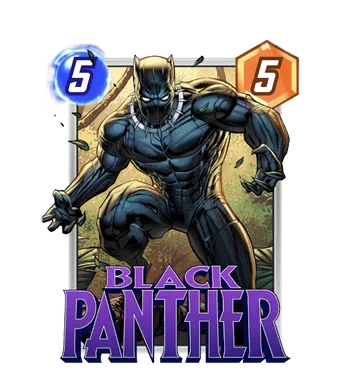
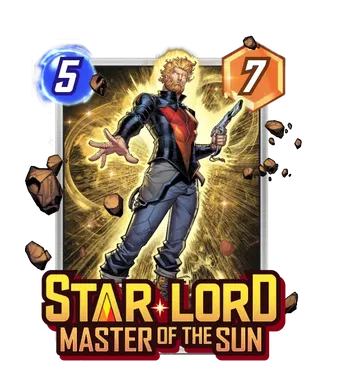
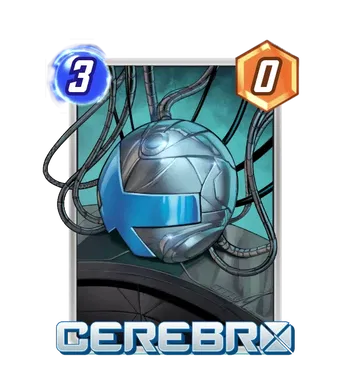
First, are the single-card win conditions. These are cards like Black Panther, Star-Lord Master of the Sun, and Cerebro. These cards are what their entire deck is built around often, and although it’s possible to win some games without them, it’s much more unlikely than winning a game with them. These are the cards that make your deck go, the reason why you’re winning your games.
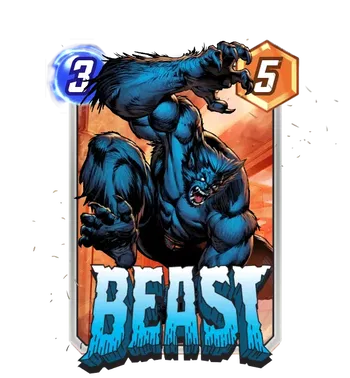
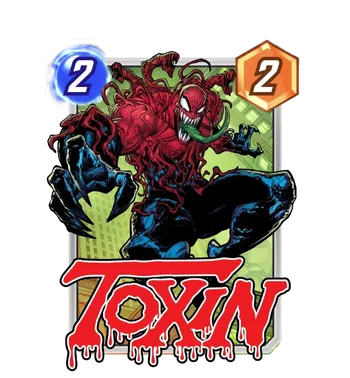
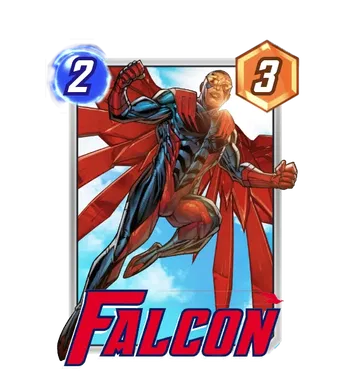
The second kind of win conditions are the “engines”. Engine refers to a set of cards in your deck that produce a lot of the power in it. Take, for example, the “engine” of Beast, Toxin, and sometimes Falcon in a Bounce deck, which has the main goal of returning low-Cost On Reveal cards with powerful effects back to the player’s hand. These are the set of cards that produce most of the Power in, and further the strategy of the bounce deck. Another example is Galacta and Gwenpool in a buff deck. Galacta and Gwenpool aren’t the single cards that let you win the game, but they further your strategy and help you produce a lot of Power.
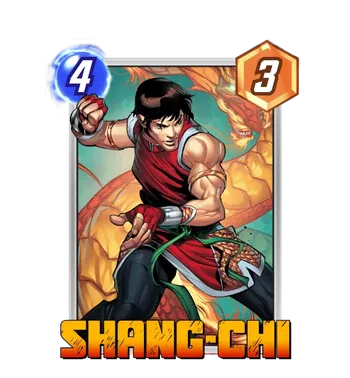
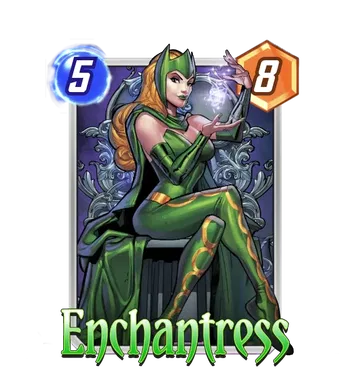
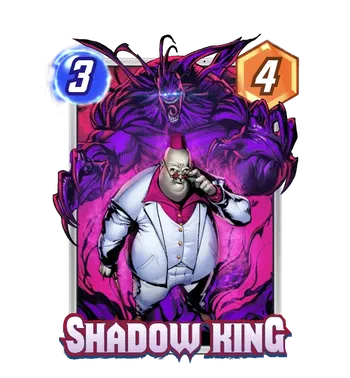
The third, and final kind of win condition is the disruption win condition. This is not a win condition with your cards, but rather you’re trying to stop what your opponent is doing. One of the best examples of this kind of deck is a Sera Control deck, where the win condition is stopping your opponent’s high power cards and combos with cards like Shang-Chi, Enchantress, or Shadow King. The tech cards, the ones that are mitigating your opponent’s output, are indeed your win condition. Although they may not be the “best” cards in your deck, the win condition is the most important card in a deck. It gives you a strategy to how you are going to win games of Marvel Snap, and lets you build out the rest of your deck supporting it!
Support Cards
The next role that I’ll be talking about is support cards. These are cards that support your win condition in your deck, or help you win through being good value alone. Most cards in Marvel Snap are support cards, so this is the most complicated category, with 4 different types of support cards to help you build your decks out further!
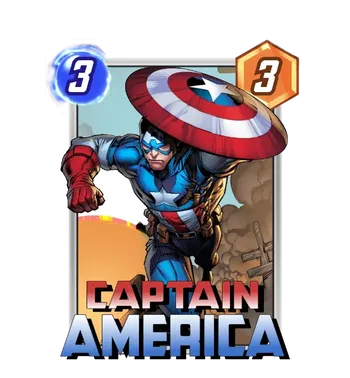
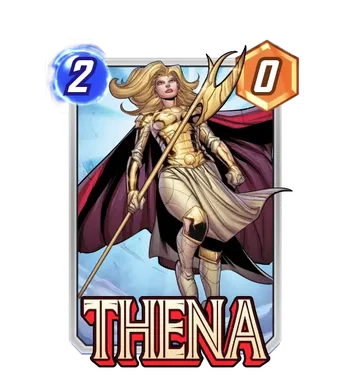
The first, and most obvious, type of support cards are Keyword cards, though any cards that further a specific gameplan fall under the umbrella of synergy support cards. These are cards like Captain America, Thena, or Omega Sentinel. These cards are all support cards of their respective decks, and they are synergy pieces that help out their win conditions. For example, Captain America helps out the engine win condition of Ongoing, largely centered around the cards Moonstone and Iron Man, whereas Thena is one of cards that generates a lot of power in a deck centered around Invisible Woman First Steps and her synergies. However, not all synergy support cards have to have a key word strategy! A card like Rhino can be a synergy support card, through his synergy with the card Ozymandias, as well as his ability to get priority for decks that want it, like a deck centered around Supergiant. Basically, a synergy support card is a card that helps your win condition through synergies like a shared keyword or another synergy, like being a Rock for Ozymandias, or a card like Shanna in a zoo deck to generate more 1-Costs!
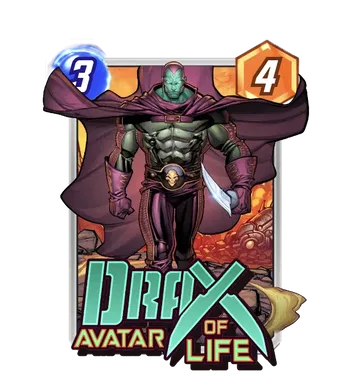
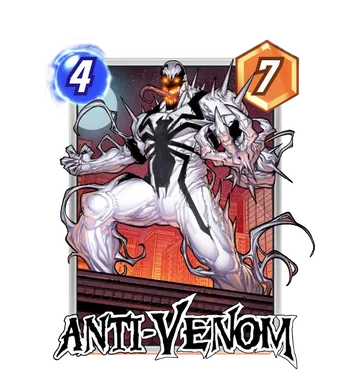
The second type of support cards are what I like to call “value” support cards. These are cards that either have a good amount of Power for their Cost, or help to reduce other cards’ Cost in a minimal fashion. First, a card like Drax, Avatar of Life is a great “value” support card, as he typically provides excellent Power output for his relatively small Cost of 3. Another great example of this is Anti-Venom. Anti-Venom provides a large Cost discount on a card, which can sometimes be of massive value if you hit a high value target like Iron Man or Gorr.
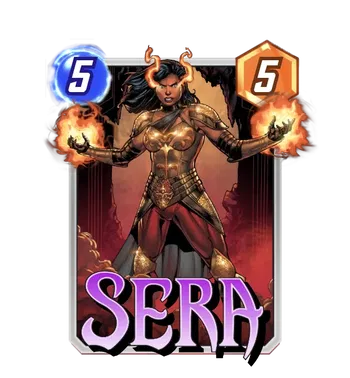
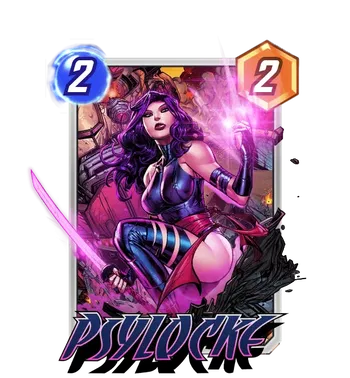
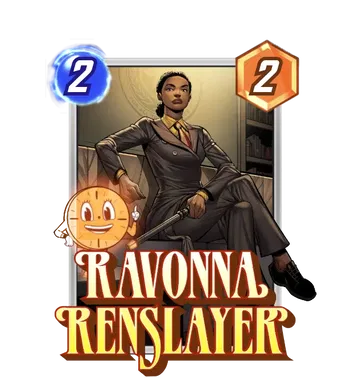
However, some cards that also offer cost reduction better fall under the third type of support cards, that I call enablers. These are arguably the most important support cards in a Marvel Snap deck, as they enable the strategy you are trying to execute. One example is Sera in a Sera tech deck. Sera’s poor stats not only enable you to lose priority going into turn 6, but her discount also enables you to play multiple tech cards, who are best leveraged on turn 6 because the cubes always double on turn 6, and tech may catch your opponent by surprise to steal some cubes, on the final turn of the game. Another example is a card like Ravonna Renslayer, who is enabling you to play Mr. Negative a turn early, but also allowing you to be able to play backup lines such as Gorr + Mystique in a 6 turn game, for example. In short, the main difference between a value cost reducer and an enabler, is that the enabler directly contributes to the strongest lines of your deck, enabling and furthering your main strategy. Of course, other enablers exist, such as Madame Web for move decks, and Psylocke for Star-Lord Master of the Sun and some Mr Negative decks.

Finally, the fourth type of support cards are payoffs, and I think these are the most straightforward. These are the reward for doing a specific game action, whether it be fulfilling a condition, taking priority, or getting a buff on a card. Some examples of these cards are Stature, Negasonic Teenage Warhead in a Supergiant deck, and Brood in a buff deck.
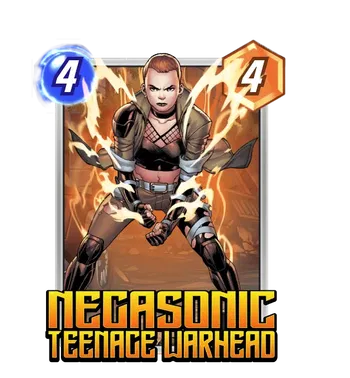
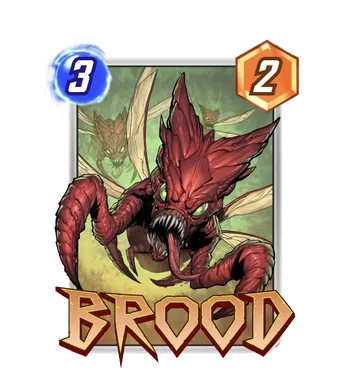
One additional important thing to touch on with support cards is that they can overlap with the next 2 roles that I’ll discuss. Support cards can also be tech cards, as evidenced by Negasonic Teenage Warhead in a Supergiant deck, but they also can be the next category that I’ll be talking about: Multipliers.
Multipliers
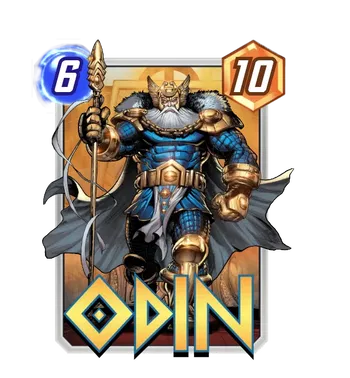
Multipliers are what allow Marvel Snap’s crazy combos, and often have defined some of the best decks in the game! From as early as Series 1, cards like Odin and Onslaught enable some crazy combos for a substantially large amount of points. I’ve split multipliers into 2 different types, largely because one style of deck in Marvel Snap plays so differently compared to the rest with its own multiplicative style.
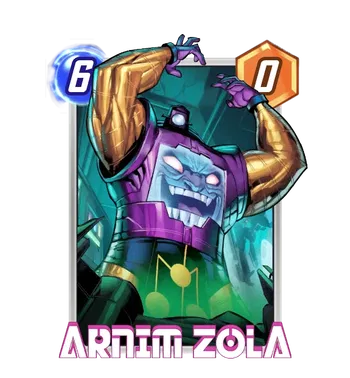
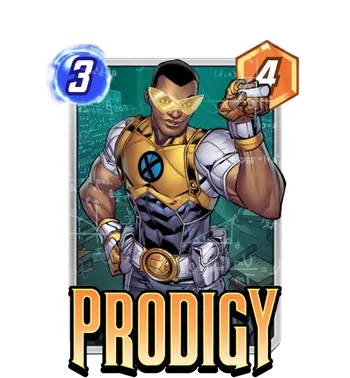
Most multipliers fall under the umbrella of duplication. Whether this be duplicating a card’s text like Mystique or Prodigy, or duplicating an ability like playing Odin on White Tiger, or Onslaught on Sera, duplication is key to Marvel Snap decks, and it is important to leverage when a deck wants and does not want to use this powerful effect. For example, End of Turn decks use a lot of duplication, trying to either trigger Invisible Woman First Steps multiple times with Jocasta, or copy its text through the means of a card like Prodigy. Decks running Arnim Zola or Taskmaster are also able to get effectively multiple copies of 1 large or important card. Duplication is key in snap, and has been the go-to way for decks reliant on playing either heavily synergistic decks like End of Turn, or “big guy” decks like Sauron or Man-Spider stay competitive with the rest of the game.
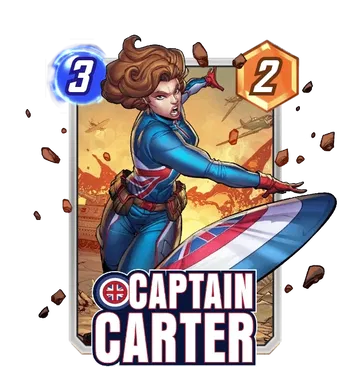
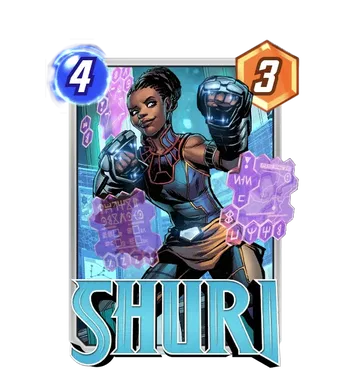
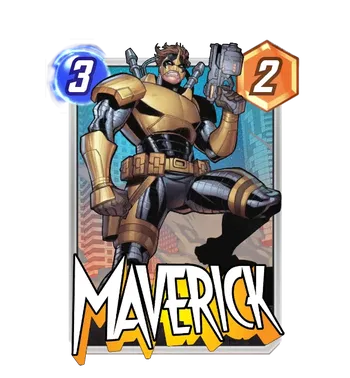
The other section of multipliers is, literally, multiplying through the lens of a buff. Whether this be multiplying your Galacta buff by 3 by using it on a Captain Carter or a Brood, or by just doubling through Shuri, these types of multiplier are multiplying the effectiveness of their buff, or buffing in a multiplicative way, like Shuri. Maverick is a great example of a card that multiplies buffs. When you buff Maverick, he passes his buff onto another card, effectively doubling his own buff. One of the most popular and powerful ways to do this is to give maverick a big buff, largely through the means of a card like Shou-Lao the Undying, so that Maverick can multiply that buff by giving it to another card. Whereas duplication is often about copying a text box or repeating an ability, buffing cards tends to be more multiplicative in nature, as opposed to duplicating.
Tech Cards
For the final role of cards, arguably the most important decision you will make in your deck, tech cards! Tech cards have been powerful ever since the release of Marvel Snap. The term “tech cards” largely refers to a group of cards in Marvel Snap whose express purpose is to interact with your opponent’s gameplan in a way to hinder them, even if it does not directly benefit your strategy. There are two main ways to pick your tech cards for a deck, and both of them are things you need to consider. For example, you probably shouldn’t run Enchantress in a bounce deck, especially if you haven’t faced an Ongoing deck in over a week!
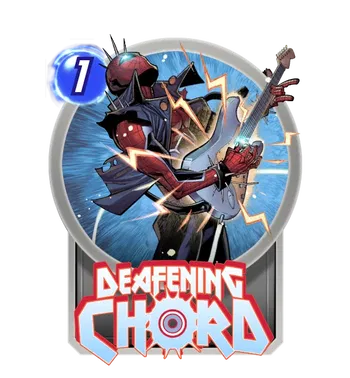
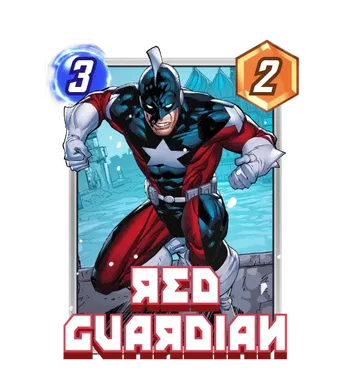
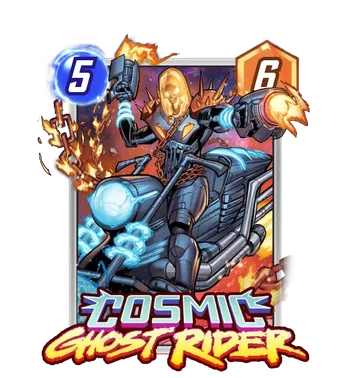
The first way to pick your tech cards is through how they fit within your deck. To reference the previous example, it doesn’t make sense to put a 5-Cost card in a deck that doesn’t support it power wise, and in a deck that wants to play 3+ cards on the final turn of the game! So, sometimes you need to choose tech cards by fit. A deck like Bounce can only realistically run tech cards like Elektra because of their low cost and how easy they can fit into the deck, whereas a deck like ramp, focused on playing high-Cost cards, is able to run the expensive tech cards, such as Cosmic Ghost Rider or the aforementioned Enchantress. Fit is an important dynamic in choosing a tech card for your deck. For example, if you want to counter activate cards, but can’t run Supergiant or Cosmic Ghost Rider, a card like Deafening Chord, Red Guardian, or Super Adaptoid is a good choice. It may not be a better card than Cosmic Ghost Rider, but if your deck cannot run a 5-Cost tech card and execute its gameplan, you won’t be able to run a card like Cosmic Ghost Rider, so you’re left running the alternatives.
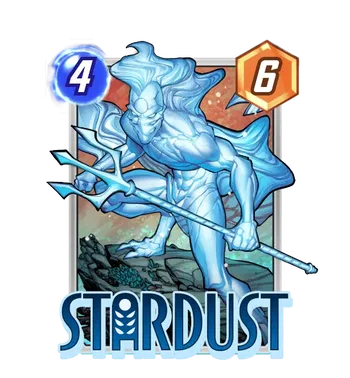
The second way to pick your tech cards is through your opponents. What decks are you facing? If you’re seeing a lot of Hela for example, a card like Stardust is a wise choice to include in your deck. Your tech cards, for the most part, are trying to help either protect your cards, or to break down your enemy’s strategy. It’s important to either have your tech cards fulfill one of those roles. If you don’t see yourself playing against any Ongoing decks, a card like Rogue or Enchantress has little to no usage for you! It’s important to ask yourself the question: “Why is this tech card in my deck?”
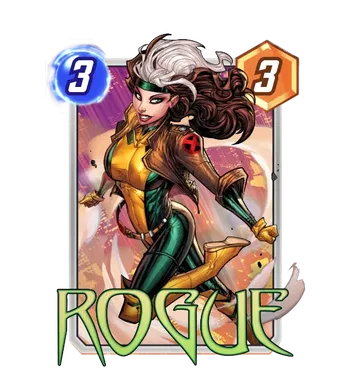
When it comes to “balancing your deck” in Marvel Snap, you need to make sure you aren’t making your deck have too many of 1 type of card. Your deck should have at least 1 win condition, and then a balanced amount of support, multipliers, and tech based on that win condition. It’s also important to avoid redundancy in deck building. If you’re running Rogue, you shouldn’t be running Enchantress as well, since that’s 2 cards that fill a role that only 1 card needs to fill. You don’t need to include 2 cards that do the exact same thing in a deck, instead 2 different cards can fill similar roles for different circumstances. One example of this is Nimrod and Black Panther. Whereas the Nimrod gameplan can produce notable amounts of points across all 3 lanes, Black Panther may be able to produce a larger points output in one lane. Against ramp, a deck centered around heavily contesting 2 lanes, the Black Panther plan may be better, as the ramp deck cannot compete with Black Panther’s point output. In general, if you have multiple win conditions in a deck, it is best if they cover for each others’ weakness, with some overlap on the cards they use. To reference the previous example, both Nimrod and Black Panther get excellent use out of Shuri, Fastball Special and Adamantium Infusion. This overlap allows them to be good complementary win conditions.
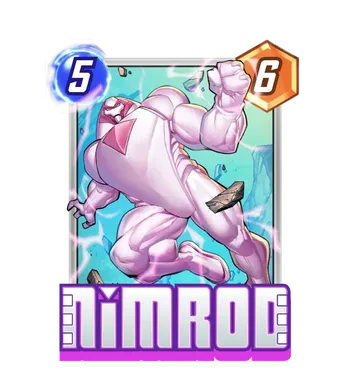
Now, I’ve talked a lot about the different types of cards you can put in a deck, but let’s put them in action now with some examples.
Star-Lord, Master of The Sun
Obviously, your win condition in this deck is Star-Lord. He is allowing you to cheat a crazy amount of Energy, and your entire deck is built around getting the most out of his effect. The rest of the deck is a quite varied mix, however. The enablers for your Star-Lord strategy, Psylocke, Wave, and Luna Snow, help you to be able to duplicate Star-Lord with Arnim Zola on turn 5, for an explosion of points on the final turn of the game. Then, you have your payoffs. Jim Hammond and Fin Fang Foom take this role, with the latter also oftentimes being copied by an Arnim Zola or Absorbing Man to put out an even greater amount of points, with Star-Lord already playing for so much in the lane on his own. From a deck construction standpoint, half of Star-Lord’s deck focuses on his enablers and payoffs. You have Star-Lord himself, 3 ways to get him out early, and 2 payoffs for executing his ability. The rest of the deck is about making Star-Lord’s true potential shine by multiplying his effect, and leveraging some of the most powerful answers to his worst matchups in the game.
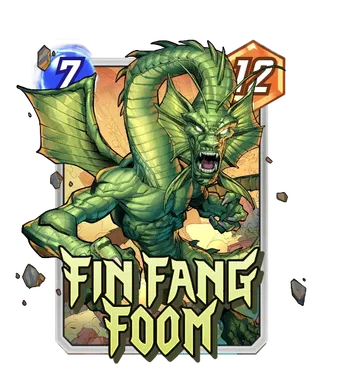
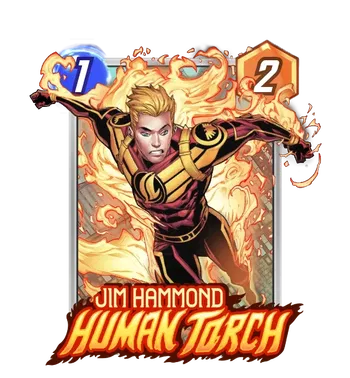
First, arguably the most important cards in the deck besides Star-Lord himself, the duplicators. In this deck, you are trying to duplicate Star-Lord’s (and Foom’s) ability as much as possible, using the cards Grandmaster, Absorbing Man, Stryfe, and, most importantly, Arnim Zola. These cards all word in tandem to create a reliable gameplan for getting at least 2 triggers of Star-Lord’s ability per game, resulting in your combo gameplan being extremely specific.
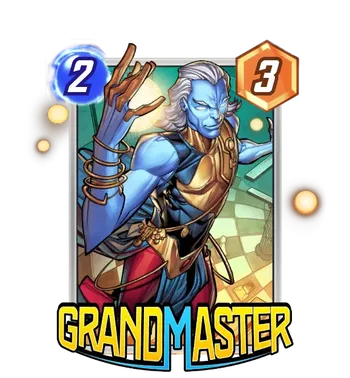
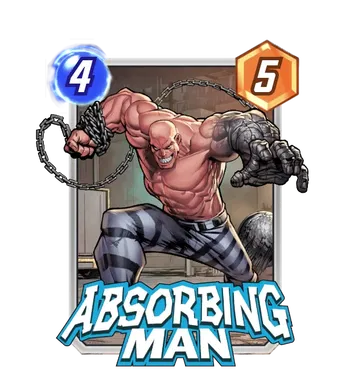
An important question to ask when building a deck like Star-Lord is the balance between payoffs and consistency. In this deck, consistency is referring to the duplicators of Star-Lord (minus Stryfe) and the enablers of getting him out a turn early. Are there too many of them? Is there not enough? These are questions largely answered by playing the deck for yourself! After a dozen or so games, you start to get a good idea of which cards are good or bad at filling their role, and if they should be replaced. One such example with early Star-Lord decks is that a lot of them, on release, contained Sunspot. After a few weeks, it was determined that Sunspot was no longer best for the deck, and that instead, running an extra tech card was better, because other decks were countering Star-Lord too easily. One of the adaptations made in those early decks was the use of Echo, to counter Cosmo and establish a safe lane to play Star-Lord. This is an example of how different cards fill different roles. The Star-Lord decks weren’t losing on points, they were losing to tech cards, so they decided to adapt by including an extra tech card. The deck didn’t need more support cards, it instead needed a tech card.
Shoucasta
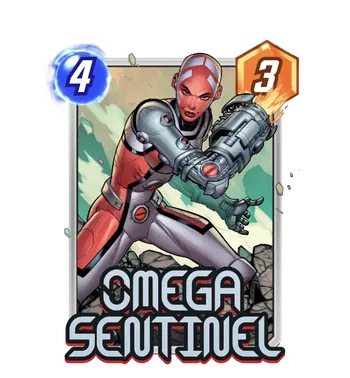
Shoucasta is an example of a deck with 2 different win conditions. This not only helps from a probability perspective, as it is more likely that a win condition (Shou-Lao or Jocasta) is drawn in any given game, while using overlap pieces such as Maverick and Scarlet Spider to make sure that its supporting cast of enablers and support cards work with both strategies. One important part of this deck, as well, is how the win conditions complement each other. For example, against a deck like Mr. Negative, the Shou-Lao gameplan is fairly weak, whereas Jocasta Omega Sentinel with a Prodigy to duplicate Jocasta’s ability is a phenomenal matchup against it because the Omega Sentinel afflicts for an effective -14 in the opponent’s Iron Man lanes.
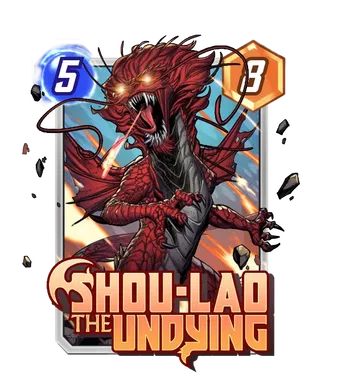
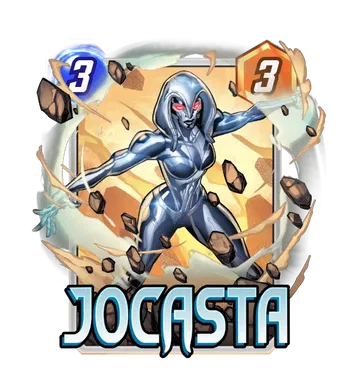
From the perspective of how the cards play their roles in the deck, a cast of Activate cards with synergy support complement Jocasta, that being Maverick, Omega Sentinel, and Scarlet Spider, 2 of which overlap with Shou. Prodigy is always present with Jocasta, because he allows for 3 more activations of the Activate abilities in a lane if he is copying Jocasta. With those 5 cards and Shou-Lao effectively set in stone, a “supporting cast” of 6 additional cards must be needed. First, we can rule out cards that are purely for stats, like Drax Avatar of Life, as Shou-Lao and Jocasta put up enough stats to win games on their own. Second, we need to get some cards that enable our Shou-Lao, which means Kitty Pryde, and 1-Cost cards or 1-Cost generators. Cards like Spider-Ham and Merlin serve as a, or as a generator of a 1-Cost.
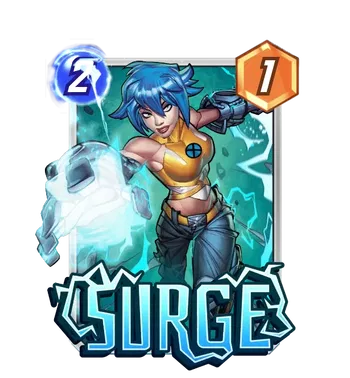
America Chavez and Agony also fill this role, but with the additional synergy of possibly buffing high value targets like Maverick and Scarlet Spider. Surge is the final card in the deck, acting as a value card so that your Shou proc can be consistently achieved on turns 3 and onward.
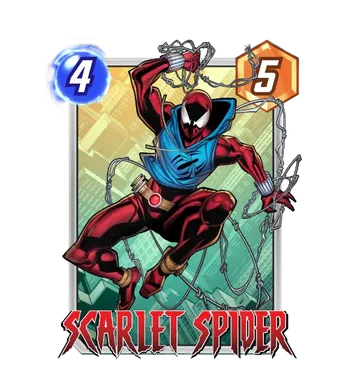
It’s important, mainly, to understand the roles that these cards play because it helps to understand where a deck’s power actually lies. For example, if someone playing Shoucasta isn’t playing multiple cards on the first few turns, and doesn't have a Jocasta on the board, it’s clear they aren’t putting up many points, and are likely to retreat if you snap. Similarly, it helps with card substitutions. It’s extremely hard to replace a card like Omega Sentinel in the deck, because you need a strong Activate ability that doesn’t need any extra support. Those cards are a lot harder to find than say, a replacement for Surge, which could be anything from Kate Bishop to Cable. Because Surge does not occupy as important of a role as Omega Sentinel, it is much easier to replace.
Ongoing w/ Anti-Venom
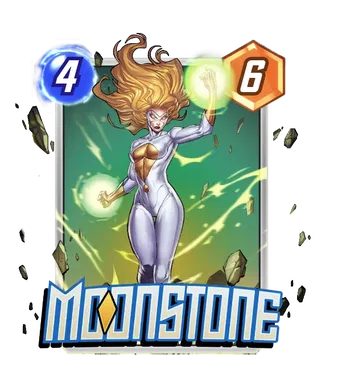
This is the “engine” style-deck I was referring to earlier. Sure, you have your strongest cards in the deck like Moonstone and Iron Man, but the deck is not overly reliant on a single plan, or a card to win its games. Rather, the entire deck has high synergy and uses that, and the fact that most of its points are distributed across a variety of cards, to not overly rely on a card. For example, although your strongest lines revolve around Moonstone, you can still win if you don’t draw it.
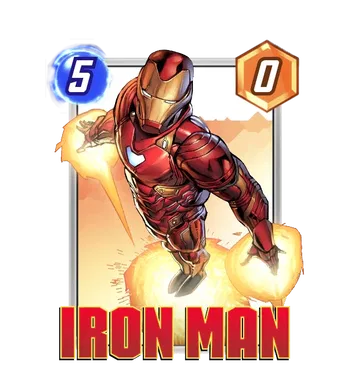
What this deck shows about roles in deckbuilding is how you need to factor in playlines. A card like Spectrum is what people might think is a natural inclusion in an ongoing deck. However, when you’re an Iron Man and Mystique deck, you really don’t have time to play spectrum without a lucky hit from Anti-Venom. You should always consider a card’s fit into its role in its deck. This deck doesn’t need the win condition of Spectrum, it is already winning games on points, and because it wants to play multiple cards on turn 6, it can’t play Spectrum in a 6 turn game. Therefore, Spectrum doesn’t fill a needed role in this deck, and hence, doesn’t fit in this version of Ongoing.
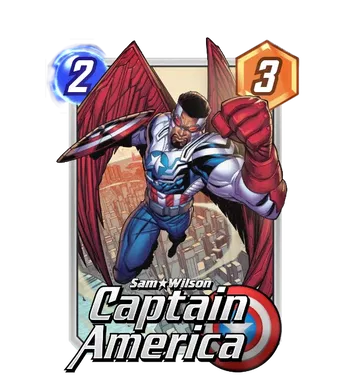
As for the deck’s composition, cards like Sam Wilson, Captain Carter, Moonstone, and Iron Man are the engine behind making the deck play for a lot of points, whereas you have Moonstone and Mystique also duplicating important abilities, and the rest of the deck being either synergy or value support cards, except from Ravonna, who is an enabler for you to play more cards, and more powerful lines like Iron Man + Mystique on turn 6, and Cosmo, who is a tech card.

Supergiant
The final of the win conditions I discussed, this deck has a disruption win condition. This is to say that its win condition is by stopping what its opponent is doing, through the means of a card like Cosmo, Shadow King, Negasonic, or Supergiant. Supergiant is the strongest of the tech cards in the deck, and also acts as an enabler for cards like Cosmo and Negasonic, as you can now see where your opponent played their cards, and make your Cosmo reads easier.
The aforementioned “balancing your deck” comes into effect here. You need to balance your tech cards with enough points to still win your matchups. In this deck, the rock package of Rhino/Debrii/Ozymandias is used to generate a notable amount of points, to assist the tech cards in not only getting priority to use, but also giving them enough supporting points to win lanes. A lot of these support cards outside of the tech and rocks cards are just value cards, and hence, easily replaceable. A card like Cable or Askani’son is easy to replace, whereas a card like Ozymandias is irreplaceable in the rocks version of the deck.
Using this effective combination of tech, a points package, and just a good supporting cast of well-statted cards, Supergiant has become an excellent deck, and this balance is crucial. You can’t replace all of Askani’son, Iron Patriot, and Cable with tech cards, because then you’ll not have enough points to win. Similarly, you can’t replace say, Negasonic, because then you don’t have enough interaction to beat some trickier matchups. The balance is important, and knowing each card’s role makes it much easier to make substitutions based on preference or collection.
I’ve talked a lot about what cards serve what roles in a few decks, but you can apply this line of thinking to any of your decks! By doing this analysis of your deck, you can identify not only weak points in your deck, and cards to replace when you aren’t doing well with it, but also you get a better understanding of the important cards in your deck. These decks are just an example for the variety of win conditions there are in snap, and how to think about building around them. A single-card win condition often runs a lot of support for one or two strategies, whereas an engine win condition has a lot of cards that distribute its power. I hope thinking of your decks in this way, assigning specific cards some specific roles, and building your deck and replacements around them, helps you to become a better deckbuilder!