
The new limited time game mode, a twist on High Voltage, came out yesterday and excitement quickly turned to dread once the shop and its implications sank in. We'll talk all about the monetization, gameplay, and presentation in this review of High Voltage: Overdrive!
Monetization
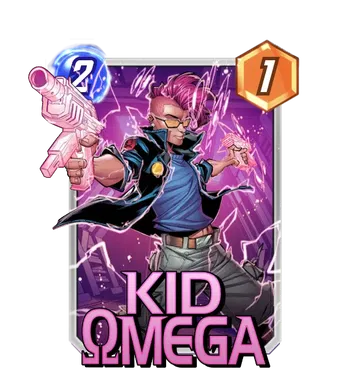
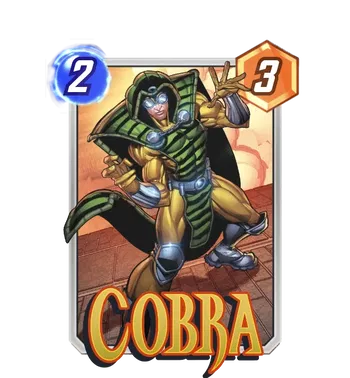
First and foremost, the shop prices are too high. In particular, Kid Omega being set at 50,000 Volts means it is virtually impossible to acquire this powerful new series 5 card without spending additional gold. The portal pulls at 15,000 Volts also means guaranteeing Cobra (or whichever specific variant you want) will also likely require gold. The prices for the remaining cosmetics and currencies seem to be in line with the Sanctum shop and elsewhere in the game that these types of rewards appear.
However, the price of the new cards being so high is going to sour a lot of people on the mode. I can understand making a new series 5 card difficult to acquire for free through gameplay. It is the main product Second Dinner can sell and they should absolutely monetize new cards and require real commitment to get them through limited time modes. Unlike many others, I do not think free to play players should expect immediate access to every card for free—that wouldn't make for a sustainable game. But the price of 50,000 Volts is so far above the cost of other new game pieces that it is going to have powerful negative consequences by alienating free to play players, small, and medium spenders.
It's going to crush any positive sentiment towards this mode and squander much of the goodwill Second Dinner had attempted to claw back since the November Series drop announcement and “the blip.” It represents a poor decision on the part of the monetization team and they should reevaluate the process that led to it.
Monetization Breakdown
Let's dig deeper into the cost of Kid Omega.
During the mode there will be a total of 27 mission refreshes which each provide a potential 875 Volts, with no ability to stack missions beyond the three slots. The rewards track contains 9500 Volts, Second Dinner is planning to deliver 5000 Volts via inbox (500 per day and 1000 on the final day), and a replacement for Twitch drops (via the web shop) of 3000 Volts. Before accounting for any Volts from wins, this adds up to a grand total of 41,125 Volts for players who never miss a mission and complete the track. A player would need to supplement this with approximately 444 wins to get Kid Omega solely through gameplay.
While this is technically possible, it would require over 50 wins a day and probably close to a thousand games. This is beyond merely “grindy,” it's clearly designed in such a way that gold is meant to make up the remaining Volts. I don't think making players play for simply a discount on a new card is inherently bad, but because of the way it's structured, with some currency earned through the mode and the rest expected to be made up with a hard-to-acquire currency, it feels like a meaningless grind and inelegant design.
What could they have done instead?
Beyond the obvious “just make it cheaper,” what else could Second Dinner have done here? Clearly they felt the need to charge more for Kid Omega. They had a higher target of revenue from the release of this card than the community expectation (which is basically always $0). Here are a few more creative ways they could have achieved something similar.
- Instead of offering Kid Omega for 50,000, make it a Series 5 Snap Pack. Then release Kid Omega as an additional Series 5 card near the end of the mode. That way, it's truly an optional discount. Some players would bypass it, others would feel it is worth it.
- Markedly increase the amount of Volts per win. Locking game pieces behind “skill barriers” makes it so that at least some players can get the reward through committed play. While some level of this skill is an illusion, it still serves to motivate a certain segment of players to engage more deeply with the mode. Some players would then be more likely to make up the gap with gold at the end.
- Give XP for losses. This is the opposite approach to number 3. It ensures that players who are willing to spend a lot of extra time in the mode are rewarded for doing so.
- Decrease the time between Kid Omega’s appearance in the High Voltage shop and his appearance in Snap packs. You are still targeting whales who want to get immediate access to the card (like content creators), but by decreasing the time between the content created with the card and when it can be acquired in Snap packs, you alleviate some of the FOMO, while bolstering the advertising effect from content made with the card.
- Make mission resets cheaper. As it currently stands, it is cheaper to buy Volts with gold than to reset missions, which is unintuitive. If missions were cheaper you still get the playerbase to spend additional gold. Some players (like content creators), may still spend the 9020 gold on day one to get the card, but you provide smaller spenders with a way to give you money as well. This feels like a much more achievable way to make gold act as a “discount” on Kid Omega.
- Place Kid Omega at the end of the rewards track, after the current final reward, instead of the shop. Most players would still need to pay some gold to acquire him, but the process would draw less criticism.
- Allows missions to stack or allow missions to be replaced. This could apply to classic High Voltage as well. As is, missing even a few of the refreshes leaves you hopelessly behind and this would be an easy way to solve that without reducing the actual play time required by much.
Monetization Advice
If your goal is to get Kid Omega, you have a few options. You could always spend a bunch of gold to get him right away, but that's not going to be appealing to most players. You could:
- Play the mode as much as you naturally feel like and then spend gold to make up the shortfall on the final day. This is going to work best for people who already like the game mode and would engage heavily with it regardless of rewards. 6000 Tokens is valued at approximately 7800 Gold, so you need to earn enough Volts to get Kid Omega for less than that to achieve discount status. A Series 5 Snap Pack is 5000 Tokens, so you need to get the price to less than 6500 Gold to get the card cheaper than that. That means you start to see a discount once you acquire 6,653 Volts. Once you get to about 13,860 Volts Kid Omega becomes cheaper than the price of a S5 Snap Pack.
- Wait until Kid Omega is available in Snap packs or 6000 tokens (July 16th) and get him then. This is probably the ideal path for most players. Don't spend a bunch of gold to get Quentin early! You can just wait! Doing this also acts as a vote against this type of monetization approach from Second Dinner in the future if they see enough data that few people acquired Quentin through the shop. It will take some patience due to Second Dinner’s misguided structuring of this event, but the card will be available later.
Gameplay
So how is the actual gameplay? Does it live up to classic High Voltage?
Opinion on this has been more mixed. I've seen quite a few people say they like the gameplay, particularly people who weren't huge fans of classic High Voltage. Players who loved High Voltage seem less enthusiastic. Personally, I fall somewhere in the middle. I didn't love High Voltage as much as some, but I have always been able to have fun building decks for that mode and maximizing my win rate (even if it didn't matter much).
So far, I haven't loved the gameplay in Overdrive and not because of a dislike of the Arishem-style randomness—if anything, that has been fun. Rather, the failure of the mode is that everything feels kind of crowded and meaningless rather than impactful. It doesn't live up to its promise of a flashy high-flying mode. Deck-building has felt especially unimportant, and even actively frustrating. Here's how I would improve the gameplay:
- Get rid of decks entirely. Give each player a deck of 12 or so cards. You could make them all charged or half of them. Either way, this leads to a more interesting dynamic than a mode that encourages stuffing 12 tech cards into a deck and waiting to see if you'll draw them. If I were going to keep decks as part of the mode, I would reduce the number of charged cards to 6 or fewer.
- Alternatively, make the reactor effects more cohesive. I understand that they're supposed to be wacky and chaotic. But as it stands now, there is no real way to work towards them or meaningfully engage with them in deck-building, leaving them to feel like something you can almost ignore before and during matches, especially given the low value placed on wins. I like the idea of making an effect that rewards putting a specific type of card in your deck, like move cards, but the effects are too disparate to feel like something you can build around and I'd like to see that changed.
Scoverdrive 😎
Appearance
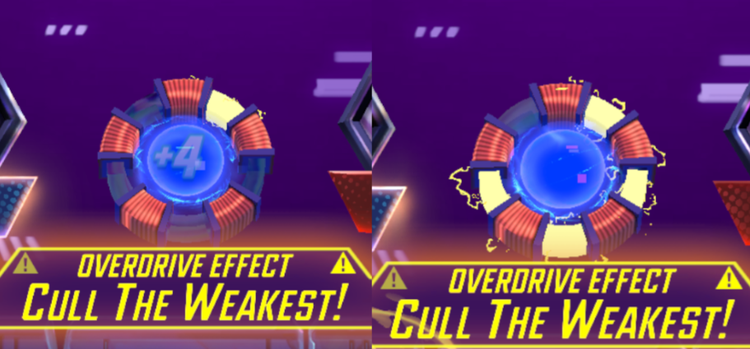
The mode mostly keeps the visual style of High Voltage. The new game board is awesome and the charged cards animation is flashy and exciting. The charged card counter on the reactor is too subtle and there are probably plenty of people who haven't even noticed it. This would be better as a more exciting countdown timer. The display of the overdrive effect also feels too subtle.
The big downside in the appearance of this mode has come from the endless animations. Having to sit through 12 or so Chimichanga On Reveals or the slow march of transforming cards has taken away a lot of the appeal of this mode as speedy and dramatic.
The whole onboarding process for this mode hasn't been great (and Deadpool's Diner before it, so it's an ongoing problem). I've seen confusion about the charged card counter, why effects change on the final turn, and why it increases. Adding confusion has been the back and forth about which cards are actually banned and the discrepancy from the initial blog.
Final Thoughts
Second Dinner needs to reevaluate their process for game mode development. The monetization here feels too expensive, rushed, and clumsy. Having players play through three resets per day, without the ability to stack missions, all to get a partial discount on an inflated gold price of a single new card, isn't an acceptable development outcome. Perhaps they need to solicit community ideas further in advance or make simpler modes that require less developmental lift, with less focus on rewards and more focus on fun. Some kind of advanced warning (beyond scattered, unconfirmed datamines) would go a long way too.
The system of releasing the blog as the mode goes live has proven inadequate. I would encourage them to release the LTM blogs at least 24 hours in advance. This gives them a chance to correct any errors, set community expectations, and build excitement. Hopefully the upcoming modes have more thoughtfully conceived monetization and gameplay.