
Hello and welcome back to Burning Questions, your weekly look at the hottest topics in Marvel Snap! This week we're talking meta health, imbalance patches, the Golden Gauntlet tournament, and more!
1) What makes a “good meta?”
Second Dinner has been pretty clear that their definition of a healthy game state is when a variety of decks and strategies are finding success alongside a meaningful diversity of card choices.
That's a pretty good definition, but everyone is looking for different things out of the game. I'll share what type of environment I personally like playing in. Obviously, this is just my opinion, but it will provide insight into why you may see some of your favorite streamers or creators praise or criticize a format as well.
There is, essentially, one type of deck I like to play. It can go by many names like “good cards,” “rate cards,” “mid-range,” “tech pile,” or as I like to call it “”4-cost nonsense.” There are a million different ways to build a deck like this, but they all essentially boil down to the same thing: good rate cards from a cost/power ratio perspective paired alongside relevant interaction.
Hope 4 Wiccan
Grand Daughters
Surge Control
Young Loki
Move & Midrange
Surge Stone
These decks have a few things that make them appealing:
- They tend to be able to slot in new, powerful cards easily. This means you can have fun with newly released cards very often.
- They usually don't have massively polarized match ups. You can easily lose if you make a mistake, but they also have the ability to win in unexpected ways or by 1 or 2 points. You feel like there is a potential path to victory in almost every match, even if it doesn't end up coming to fruition.
- In other words, this type of deck often ends up as the favorite deck type of people who fancy themselves as being good at card games, even if they're not. The interaction and decision-making of this style of deck grants a feeling of “outplaying” the opponent when it wins, even if that is occasionally illusory.
So, what does this type of deck have to do with what meta games I enjoy? Well, this type of deck has a few major drawbacks as well.
- Can be forced out of the meta when there is a dominant deck or decks that go really tall and are hard to interact with.
- Some examples of decks that do this are the current Thanos deck, Hela decks of past formats, and move-bounce in its heyday. We can all recall times we've seen content creators complain about these specific decks.
- Decks that can put out massive power and are also hard to interact with force other decks to focus on points. These “rate cards” decks have a harder time competing in formats that are so focused on points.
- They are always going to be more expensive. Because they often slot in new cards that provide benefit, metas in which these decks are strong favor players with more resources or the ability to send money on the game. The “season passler” decks composed of mostly season pass cards are prime examples of this archetype.
- They rely less on synergy and more on value and interaction or small packages, so they exaggerate the value of newly released generically good cards as opposed to synergy pieces.
To me, (and keep in mind, this is my personal preference) the enjoyability of a meta is directly proportional to how strong these “rate cards” decks are. A meta where these decks are less viable is going to be less enjoyable and formats where they are strong and there are a variety of valid ways to build them are always going to be my favorites.
There's also a message in here about how to cut through some of the different card and meta evaluations you may hear from creators, since their opinions often skew towards this type of deck as well. Individuals will often evaluate a meta in very different ways than Second Dinner. So… I'm looking forward to a Thanos nerf in the May 29th OTA!
2) Should imbalance patches come back?
Before Marvel Snap got any new limited time modes like High Voltage, there were ‘imbalance patches.’ These were temporary OTA card changes, mostly just to mix things up and provide some seasonal flavor. As someone who derives most of my Snap joy from making new decks, trying to figure out a format, and playing new things, I loved them.
However, they weren't especially popular among more casual players, who found them needlessly confusing, nor hardcore players, who found them to be a distraction in the same way Hot Locations are. There was a narrow band of committed and plugged in players (you and I, dear reader, fall into this category) who liked them. I love the idea of temporary changes, though, and think it's a luxury that a digital game has compared to a physical card game. So what's the solution? Could these be brought back?
It seems NetEase, the publishers of the Chinese Marvel Snap client, may have hit on a nice way to implement fun, wacky, temporary changes: put them into a separate mode. Welcome to Genosha Party Mode!
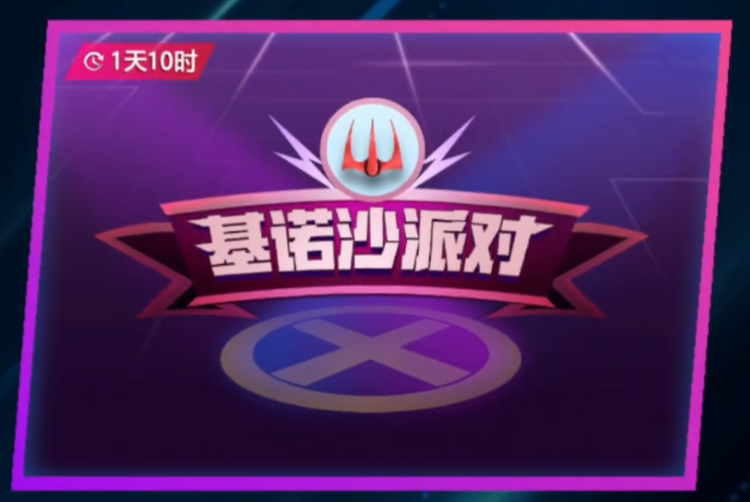
Genosha Party Mode is a separate game mode that is open twice a month, for just 48 hours at a time. Each time it returns there is a different rule change. You can check out video gameplay of it in the links below.
- The first time, all 4-Cost cards had their cost reduced to 1.
- The second time, every time an On Reveal went off, that card gained a random Ongoing ability.
They were both fun, especially the second iteration. Now, these aren't even the most imaginative rule changes you could come up with. Something like the Avengers vs. X-Men imbalance patch would work even better, in my opinion. The beauty of this game mode is that you don't have to worry about perfect balance. It only lasts 2 days at a time and is meant to throw things out of balance—that’s the core promise of the mode. The temporary nature of each rule set means it's kind of like a better version of Hot Locations too! A new mini-meta will develop and then be totally different the next time.
Second Dinner has been a little too precious with new game modes. In their admirable quest to make each new game mode unique, with powerful visuals and identity, they've limited themselves to modes that require a much more difficult development lift. After all of that development we've gotten Deadpool's Diner, which had to be shelved due to unpopularity, Sanctum Showdown, which needed an emergency ban list, and High Voltage. I adored Sanctum Showdown. High Voltage is fun too, though it’s shouldering a big load by being brought back so often and I'm worried about sentiment shifting on that mode as well.
The relatively straightforward Chinese draft mode, in addition to Genosha Party Mode, can add variety to the game without the same development expenditure. I know Second Dinner endeavors to make super creative and novel modes, but their counterparts seem more willing to throw things at the wall instead of reinventing the wheel each time. Second Dinner should follow suit.
3) Are you playing in the Golden Gauntlet tournament?

Yes! As for what I'm going to play… midrange nonsense is at a low point, so I may have to find something other than my favorite deck style!
Be sure you check out the stream this Saturday May 24th starting at noon Eastern Time on Twitch and YouTube! Commentary will be provided by ItsGuestGaming, SuperTechGod, and KMBest!
And be sure you watch for several members of the Snap Fan team in addition to myself. Snap Fan contributors that are in the event include Sanktanglia, ekAugust, JimmyDickins, Braude, and Dualgloves!
4) Q: How did the team settle on Elixir's current design? Was he tested as an Activate? Has he always been this way or was he changed to his current design in response to being too strong or too weak in testing?
One thing I learned about Firehair is that she is pretty niche in standard snap but she is awesome in High Voltage. Is elixir a "mode card" that you think will shine somewhere like that more than regular snap? Does the team design cards with that in mind, specifically tailoring them to strength in other modes?
A: He was way too strong as an Activate, that's where we started. We don't think much about modes right now and just focus on ranked, but that could change over time as we lock in more returning favorites like High Voltage.
Author's note:
First off, Elixir hasn't been quite as bad as I'd expected, but he certainly hasn't been very impactful. There are a few different things the balance team could do to improve Elixir. Changing him so that he simply revives the last destroyed card rather than requiring that card to have been destroyed on the previous turn would definitely be a major buff. However, if the team found that Activate was too strong, this would likely be as well.
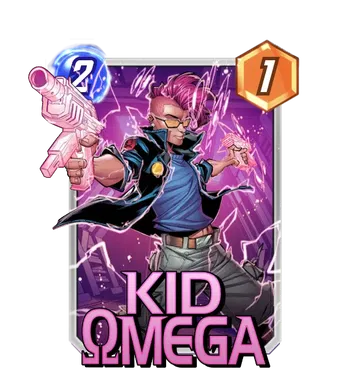
A smaller nudge they could give him would be to at least make him target the highest power card destroyed on the previous turn instead of a random one. Really though, the main thing Elixir needs is Quentin Quire. Kid Omega is releasing sometime next month via a Limited Time Mode and will help Elixir find a place. If you skipped Elixir, you might want to reconsider if you think he could be good in tandem with Kid Omega.
5) Q: Snap has been around for over 2 years now, and we still don't have global matchmaking. Is there a technical reason that it hasn't been implemented? Not a priority? Or something else entirely?
A: As we worked on this, we discovered along the way that it was more complex than expected. After that discovery, the team responsible switched to working on changes related to self-publishing, as a high-priority endeavor that required their unique strengths. It hasn't been abandoned, but has been delayed.
-Glenn
Author's note:
It's understandable that something as potentially hardware intensive as global matchmaking could come up against some technical challenges. However, this is one of my main wants for Snap. Global matchmaking is important for queues times, ranked ladder integrity, and a variety of other aspects of the game. I hope the team is eventually able to get this done.
That's it for this week! Hop into the comments and share your thoughts! Come find me on social media and be sure to tune into the Golden Gauntlet tournament this weekend!